Light Saber Colors and What They Mean
Share
Ask ten saber owners why they chose their blade color and you will get ten different answers. Some pick the shade that feels like them. Some match it to a costume or a hilt finish. Some change it every evening. Light saber colors are one of the most personal parts of the hobby, and the good news is that with modern LED sabers you are never locked into one.
In this guide we look at what each color tends to communicate, drawing on everyday color psychology and symbolism, and how to choose a shade that fits your style, your hilt and the way you use your saber.
Can You Change Your Blade Color?
Yes. SlayerSaber sabers offer 12+ blade colors that you switch in one click. How the color behaves depends on the electronics:
- Core: one powerful LED in the hilt lights the whole blade in any solid color you like.
- Pixel: LEDs run along the whole blade, so on top of solid colors you get moving effects such as flicker, lightning and rainbow.
- Pro: the same pixel blade with a fully programmable soundboard, so you can tune the effects themselves.
So the real question is not which color to buy, but which color you will reach for most often.
Light Saber Colors and What They Mean
Color meanings are not fixed rules. They are associations most people share, shaped by nature, art and daily life. Here is a quick reference.
| Color | Common associations | Personal style |
|---|---|---|
| Blue | Calm, trust, loyalty, focus | Classic, composed, timeless |
| Green | Nature, growth, balance, renewal | Grounded and thoughtful |
| Red | Energy, passion, intensity, danger | Bold and dramatic |
| Purple | Rarity, creativity, royalty, mystery | Distinctive and individual |
| Yellow and gold | Optimism, warmth, wisdom, attention | Bright and confident |
| Orange | Enthusiasm, courage, adventure | Playful and energetic |
| White | Clarity, purity, a fresh start | Minimal and elegant |
| Cyan and teal | Freshness, clarity, the sea and sky | Modern and cool |
| Pink | Warmth, kindness, playfulness | Expressive and unexpected |
A Closer Look at the Most Popular Colors
Blue: the calm classic
Blue is linked with the sky and the sea, and in color psychology with trust, calm and concentration. It is the most traditional choice for a saber and pairs beautifully with silver and chrome hilts. If you are unsure, blue is very hard to regret.
Green: balance and growth
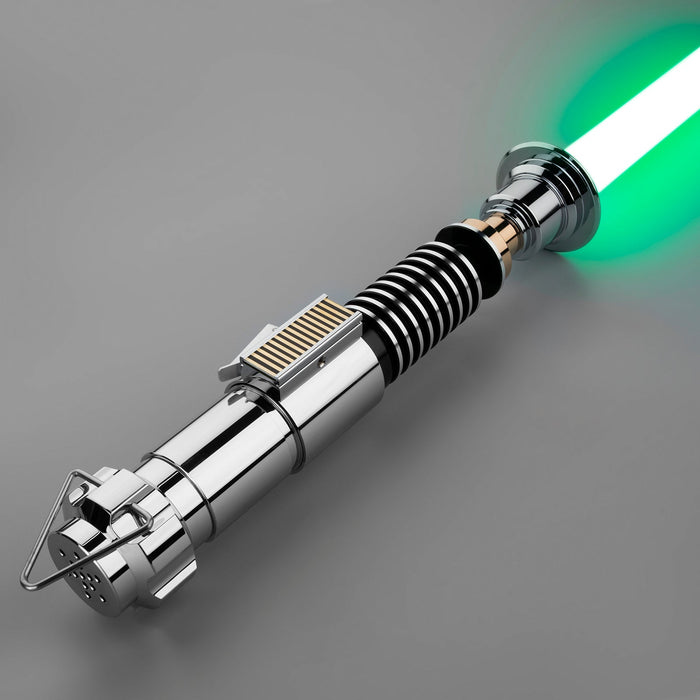
Green is the color of living things, so it carries ideas of growth, harmony and patience. The human eye is especially sensitive to green light, which is why a green blade often looks very bright in person. It suits both dark and polished hilts.
Red: power and intensity
Red is the color of fire and adrenaline. It signals energy, passion and a little menace, which is why it is so popular with owners of black, weathered and crossguard hilts. Our villain-style hilts are often shown with a red blade for exactly that reason.
Purple: rare and individual
Purple has long been tied to royalty and rarity, because purple dye was once expensive to make. Today it reads as creative and a little mysterious. It is a great choice if you want your saber to stand apart. The Wisteria Light Saber, with its purple cord wrap and gold fittings, shows how well purple works when the hilt and blade are styled together.
Yellow and gold: warmth and confidence
Yellow is cheerful and optimistic and draws the eye quickly. Warm gold and amber tones feel wise and grounded, and look striking against brass, gold and champagne hilt finishes.
White: clean and minimal
White suggests clarity and a fresh start. It is understated, photographs crisply and suits owners who prefer a minimal look.
How to Choose Your Color
Match it to your hilt
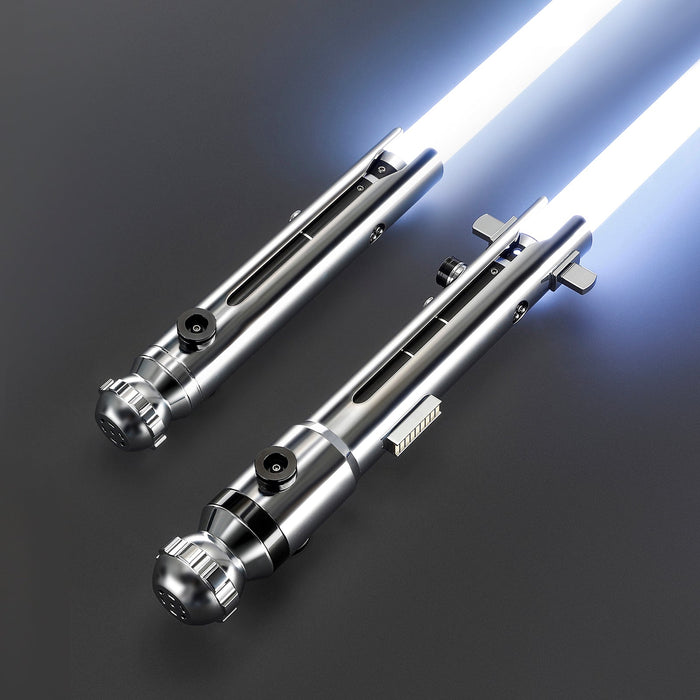
Think of the blade and hilt as one design. Cool colors like blue, cyan and white flatter silver and chrome. Warm colors like red, orange and gold flatter black, gunmetal, brass and gold. Some hilts even come in several finishes: the Glacier Light Saber has silver hilts with blue, red or black rings, so you can coordinate the rings with your favorite blade.
Match it to how you use it
- Dueling: pick a color you and your partner can tell apart at a glance. Two contrasting colors make choreography easier to follow and to film.
- Filming and photos: very saturated colors such as deep red or violet can look darker on camera than in person, while blue, cyan, green and white tend to read brightly.
- Display: choose a color that suits the room lighting. Warm tones feel cozy in the evening; cool tones look sharp in a modern space.
Match it to your mood
Because you can switch in one click, many owners keep a favorite and change it to suit the moment. With Pixel electronics, effects like flicker, lightning and rainbow add yet another layer of personality.
Colors for Pairs and Gifts
If you buy two sabers for a pair of duelists, pick contrasting colors from the start: blue and red, green and purple, or white and orange all look great together. Our matched sets, like the Mistral Pair and Kestrel Pair, are an easy way to start. For a gift, choose a color that reflects the person's personality, and remind them they can always change it.
FAQ
How many colors can a SlayerSaber show?
Our sabers offer 12+ blade colors that you can switch in one click. Core lights the blade in any solid color; Pixel adds moving effects along the blade.
What is the most popular light saber color?
Blue, green and red are the classic favorites, but purple and white are increasingly popular with owners who want something more personal.
Which color looks brightest?
Green, blue, cyan and white generally appear brightest to the eye. Deep red and violet look rich but can appear a little darker.
Can I use a rainbow effect?
Rainbow is one of the moving effects built into Pixel electronics, along with flicker and lightning.
Find a hilt that suits your color: browse our Pixel sabers.